Heavy Jet Charter Cost: $8,500-$10,000 An Hour
Heavy jets run $8,500-$10,000 an hour and clear transatlantic range. What a G450 or Falcon 900LX costs and carries, and where ultra-long-range takes over.
- Typical seats
- 14
- Range
- 5,200 nm
- Typical mission
- Intercontinental and transatlantic
Honest all-in cost
$8,500–$10,000/flight hour
Rates as of October 2026. Cross-operator range, not one broker's quote.
- Flight time (2 hrs billed)
- $17,000–$20,000
- Federal Excise Tax (7.5%, 26 U.S.C. §4261)
- $1,275–$1,500
- Repositioning, overnight crew, landing/handling fees
- Varies by base and route, not in this sample
- Sample 2-hour flight, all-in
- $18,275–$21,500
Real quotes add repositioning legs, daily minimums, overnight crew fees, fuel surcharges, and international handling where they apply. Operators that quote a bare hourly rate without these are underselling the true cost. Use the full estimator to model your actual trip.
Heavy jets are where private aviation stops being about avoiding a commercial connection and starts being about crossing an ocean without one. Paramount Business Jets prices its large-jet category, the aircraft brokers call heavy, at $8,500 to $10,000 an hour for types like the Challenger 605, typically seating 10 to 14 with 2,811 to 5,200 nautical miles of range. The longer-legged ones clear New York to London, 2,999 nautical miles, nonstop with real reserves.
The band is narrower than the label suggests, because the biggest aircraft once sold as heavy jets have moved up. Paramount now files the Bombardier Global 6000 and the Gulfstream G550 under ultra-long-range, each at $14,000 an hour, so a quote for either will land well above this page’s $10,000 ceiling. At the other end, Dassault’s Falcon 2000LXS, which Paramount still calls super-midsize, prices at the $8,500 heavy floor. “Heavy” is a range of cabins, not a single price.
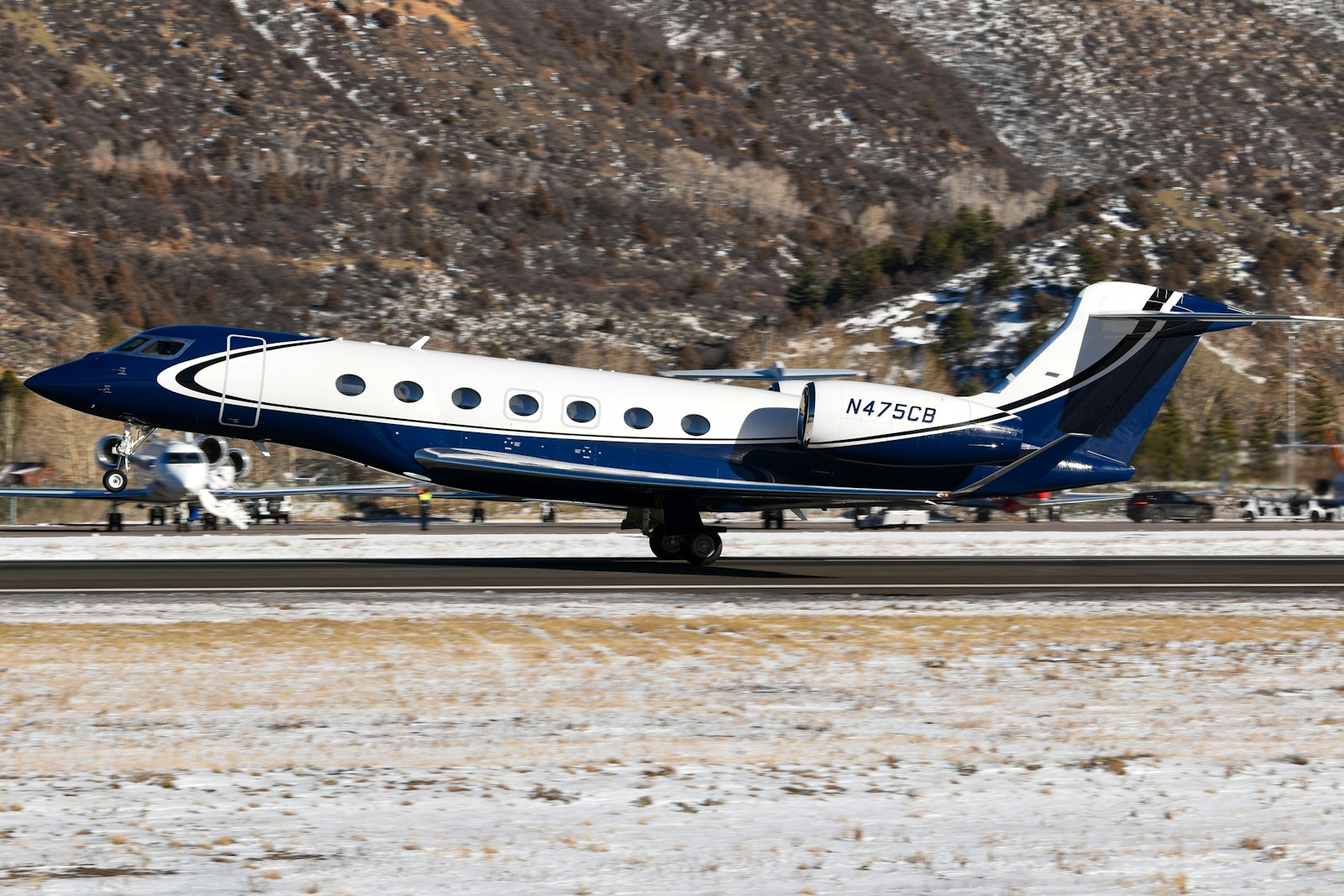
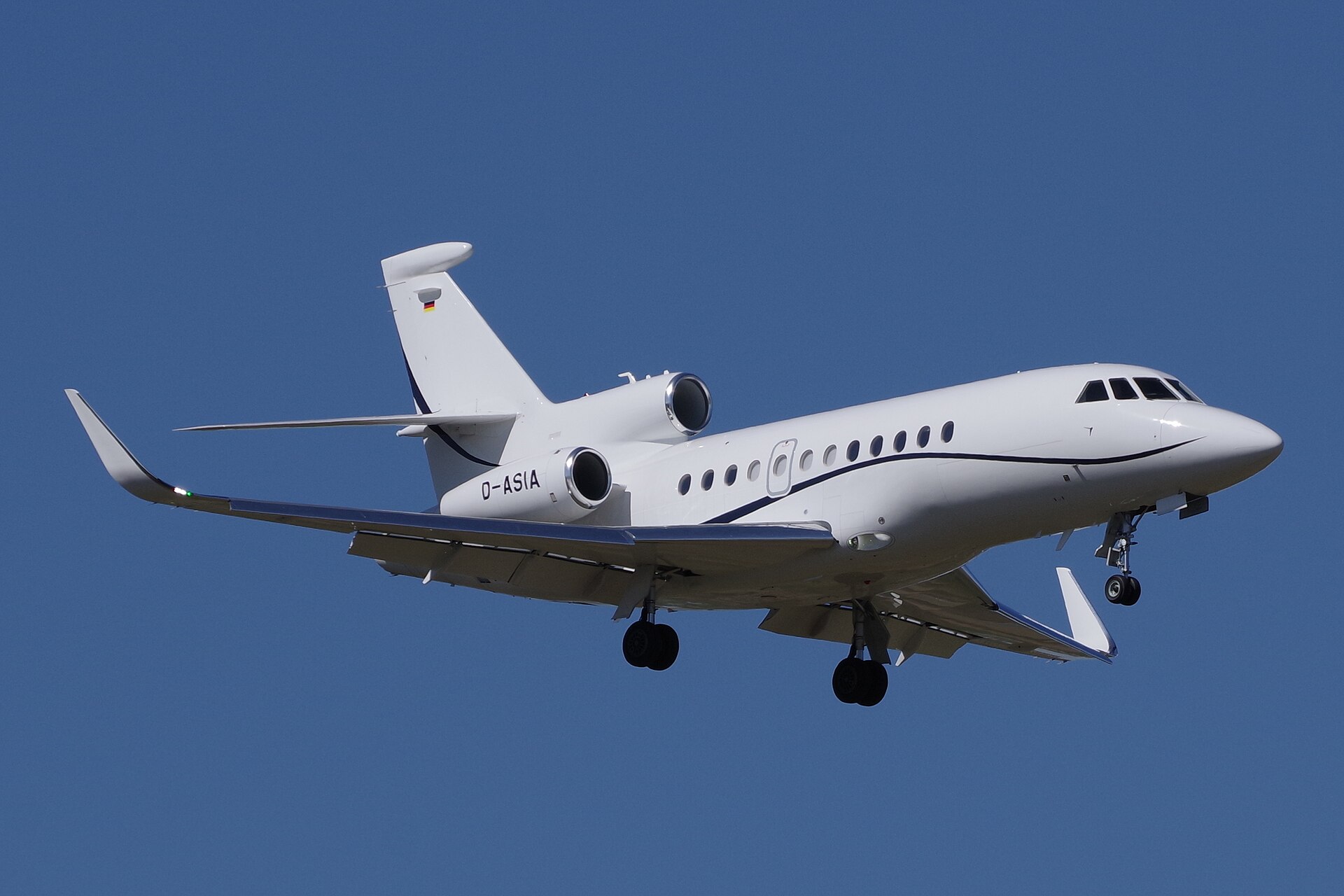
Three aircraft show how wide that spread really is. Dassault’s Falcon 900LX, a three-engine design that trades a slightly slower cruise for genuine short-runway capability, prices at $9,000 an hour, with 4,500 nautical miles of range and up to 14 seats. Gulfstream’s G450 is the value pick at $8,500 an hour, 4,350 nautical miles, up to 14 seats, and a cabin that runs 45.1 feet long with 6.2 feet of headroom, enough for genuine stand-up movement the length of the aircraft. Above them, the G550 prices at $14,000 an hour for 6,750 nautical miles of range, enough to clear Tokyo to Paris nonstop, a mission past what most aircraft called “heavy” can do, which is why Paramount now lists it as ultra-long-range.
| Aircraft | Paramount’s category | Hourly rate | Range | Max seats |
|---|---|---|---|---|
| Gulfstream G450 | Large | $8,500 | 4,350 nm | 14 |
| Falcon 900LX | Large | $9,000 | 4,500 nm | 14 |
| Bombardier Global 6000 | Ultra long range | $14,000 | 6,000 nm | 16 |
| Gulfstream G550 | Ultra long range | $14,000 | 6,750 nm | 18 |
The G550’s range-to-rate ratio is the standout of the two that moved up: it out-ranges the Global 6000 by 750 nautical miles at the same $14,000 an hour. That’s the reason experienced charter brokers will sometimes push a client toward a G550 quote over a Global 6000 even when both show up under the same “heavy jet” search filter.
What actually differs at this altitude
Cabin standing height, a real galley with hot catering capability, a separate crew rest area on the longest-range models, and lavatories that don’t require folding into a closet, all become standard at this size. This is also the category where international handling fees, customs, and permit costs start meaningfully affecting the all-in number, since heavy jets are the ones actually flying international legs.
The full cost picture
Beyond the 7.5% federal excise tax, expect international handling and permit fees on any transoceanic route, along with overnight crew costs on multi-day trips (heavy jets routinely fly missions that keep a crew away from base for several days). Fuel surcharges also matter more here: a heavy jet burns meaningfully more per hour than a midsize, so a spike in jet fuel prices shows up faster and larger in a heavy-jet quote than in a lighter category.
A same-day New York-to-London-and-back turn is the case where crew rules bite hardest. The flight itself is roughly 6.5-7 hours eastbound and closer to 7.5-8 hours on the return against headwinds, both individually inside the 10-hour flight-time cap an unaugmented two-pilot crew is allowed under 14 CFR 135.267, but combined with ground time in London, the full duty period usually forces either an overnight in London or a second crew waiting at the destination. Ask any operator quoting a same-day heavy-jet transatlantic turn how they’re covering crew legality; a quote that doesn’t address it is a quote that hasn’t been fully priced yet.
Where it sits on the ladder: a super-midsize jet runs roughly $2,300-$2,500 less an hour on a domestic leg, and an ultra-long-range jet is the step up when 5,200 nautical miles stops being enough. Price your own routing with the charter cost estimator, or compare every category on the hourly rate by aircraft class page.
Priced against the real hourly range, not one operator's number.