Super-Midsize Jet Charter Cost: $6,200-$7,500 An Hour
Super-midsize jets run $6,200-$7,500 an hour and clear true coast-to-coast range. What the Challenger 350 and its peers actually cost and carry.
- Typical seats
- 10
- Range
- 4,018 nm
- Typical mission
- Nonstop coast-to-coast
Honest all-in cost
$6,200–$7,500/flight hour
Rates as of October 2026. Cross-operator range, not one broker's quote.
- Flight time (2 hrs billed)
- $12,400–$15,000
- Federal Excise Tax (7.5%, 26 U.S.C. §4261)
- $930–$1,125
- Repositioning, overnight crew, landing/handling fees
- Varies by base and route, not in this sample
- Sample 2-hour flight, all-in
- $13,330–$16,125
Real quotes add repositioning legs, daily minimums, overnight crew fees, fuel surcharges, and international handling where they apply. Operators that quote a bare hourly rate without these are underselling the true cost. Use the full estimator to model your actual trip.
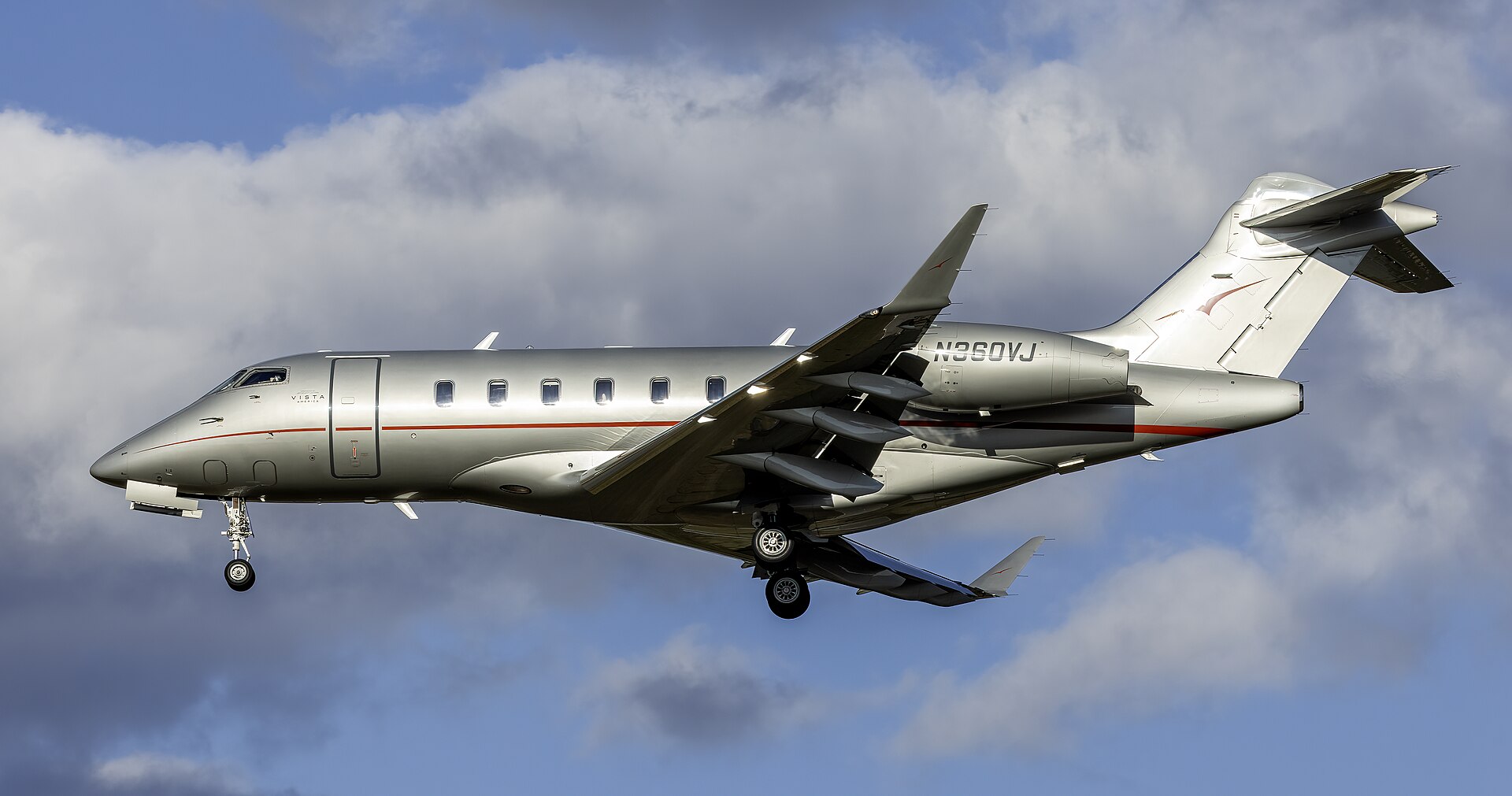
The Challenger 350 is the aircraft most people mean when they say “super-midsize,” and Paramount’s own charter page prices it at $7,500 an hour, the top of the $6,200-$7,500 category range. Typical configuration seats 8 passengers with room for 10, and the 3,250 nautical mile range clears a genuine nonstop New York-to-Los-Angeles run (2,151 nautical miles) with margin to spare, which is why Paramount sells this class for nonstop coast-to-coast.
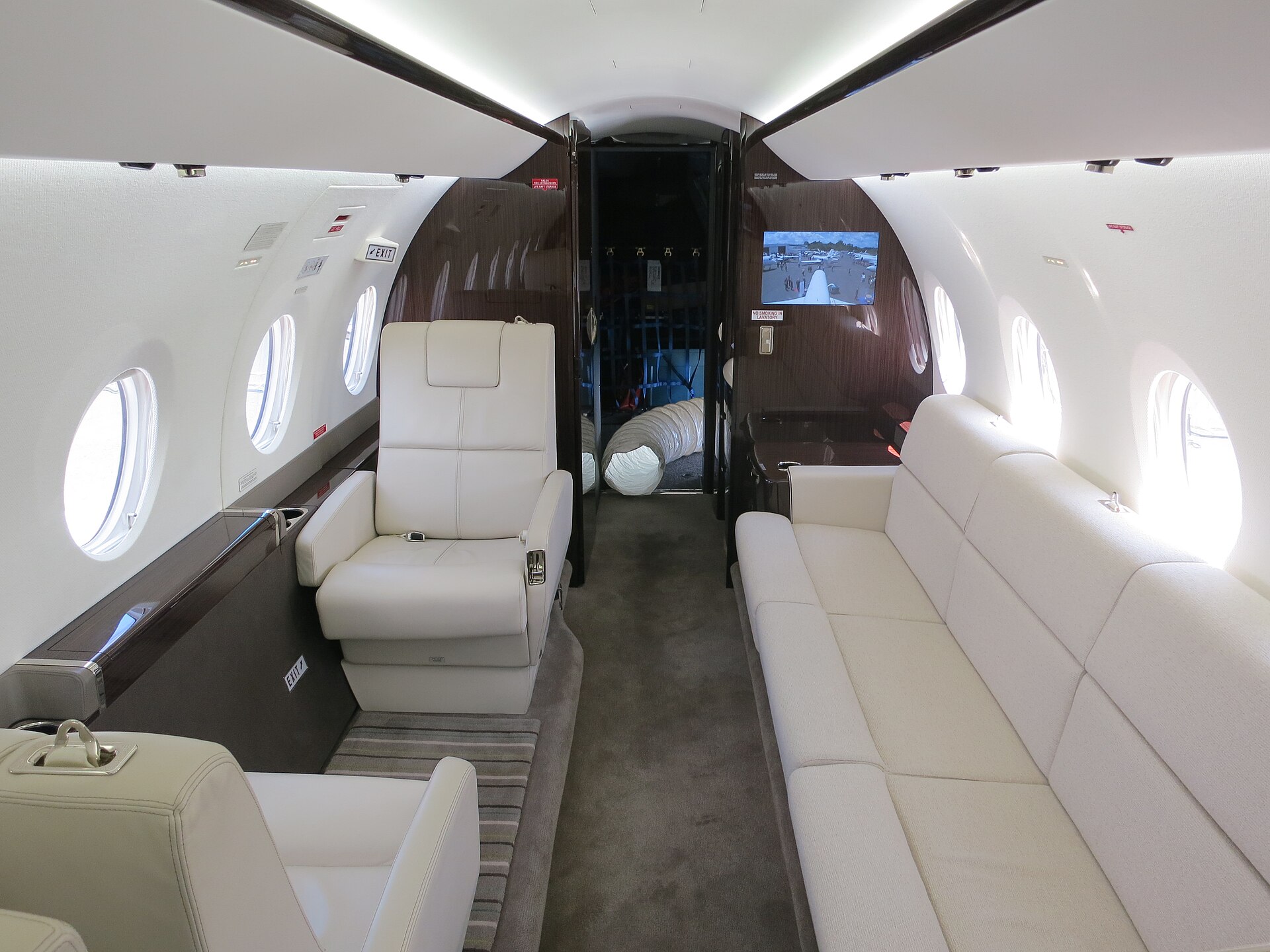
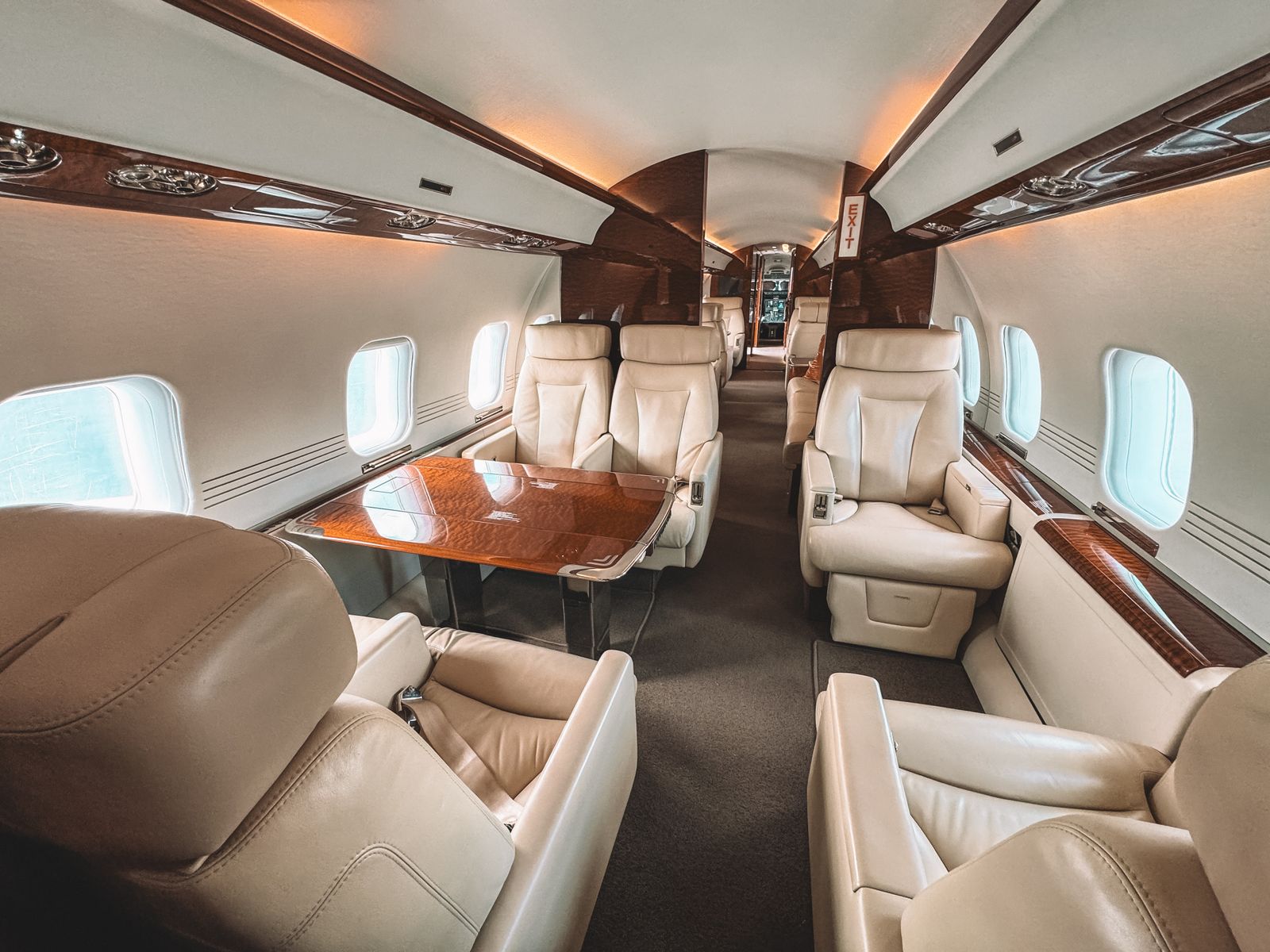
This is the category where the math shifts from “shorter regional trips” to “the aircraft that actually replaces a commercial first-class ticket on a long domestic route.” Cabin height and width both step up from midsize, and most super-midsize jets carry a real galley and lavatory rather than the compact versions found in smaller categories.
The other aircraft in the category
The Challenger 350 isn’t the only super-midsize option, and the gaps between the alternatives are bigger than the shared label suggests. Cessna’s Citation X, winner of the 1996 Robert J. Collier Trophy and for years the fastest civilian aircraft flying, still cruises at Mach 0.90; at Paramount’s listed 525 knots against the Challenger 350’s 469, it covers New York to Los Angeles about 30 minutes faster at cruise speed. Paramount prices it at $6,200 an hour, the floor of the super-midsize band, with 2,890 nautical miles of range and 8-9 seats depending on configuration.
Gulfstream’s G280 is the range pick: $7,500 an hour, the same as the Challenger 350, but 3,600 nautical miles of range, the longest in the category, and a cabin that runs 6.07 feet high and 8.5 feet wide, taller and wider than the Challenger 350’s. For a mission that’s genuinely long for this class, Los Angeles to Hawaii, New York to most of South America, that extra 350 nautical miles of range over the Challenger 350 is the difference between nonstop and a fuel stop.
Dassault’s Falcon 2000LXS is the outlier: Paramount files it as super-midsize but prices it at $8,500 an hour, above the band and level with the floor of the heavy-jet class, with 4,000 nautical miles of range that edges into heavy-jet territory and seating for 10. What that premium buys is genuinely short-runway performance, a Falcon trait since the original 2000, which opens smaller regional airports a Challenger 350 or Citation X can’t use comfortably. Three aircraft, three different reasons to pick them, all fairly called “super-midsize.”
| Aircraft | Hourly rate | Range | Typical seats |
|---|---|---|---|
| Citation X | $6,200 | 2,890 nm | 8 |
| Challenger 350 | $7,500 | 3,250 nm | 8 |
| Gulfstream G280 | $7,500 | 3,600 nm | 9 |
| Falcon 2000LXS | $8,500 | 4,000 nm | 10 |
Notice the Challenger 350 and G280 charter at the identical $7,500 hourly rate despite the G280 carrying 350 more nautical miles of range. Rate doesn’t track range in a straight line inside this category; it tracks a mix of demand, fleet availability, and how many operators fly a given tail number. Two aircraft priced the same are not necessarily equally capable for a specific mission.
Where the premium over midsize pays off
If your typical trip is under 2,000 miles, you’re paying for range you won’t use. The category’s advantage shows up specifically on routes a midsize jet can’t fly nonstop: transcontinental legs, Northeast-to-West-Coast trips, or any route where a fuel stop would otherwise add 45 minutes to an hour. Its largest cabins also seat up to 10, one more than a midsize, which matters for a party of 9 or 10 that would otherwise need two smaller aircraft or an uncomfortable squeeze.

The all-in math
Federal excise tax at 7.5% applies on top of the hourly rate. The 2-hour daily minimum is standard, which means a short regional hop in a Challenger 350 or G280 at $7,500 an hour still bills $15,000 for flight time alone before tax, the same floor a genuine coast-to-coast leg would clear in roughly the same two hours of billed time on a faster aircraft. On the transcontinental routes this category is built for, ask specifically about crew overnight fees if the trip requires the crew to stay away from base, common on true coast-to-coast round trips flown in a single day.
Fuel burn is meaningfully higher than a midsize jet turning similar cruise power, so during a stretch of elevated jet fuel prices, the fuel-surcharge line on a super-midsize quote moves more in dollar terms than the same percentage surcharge on a midsize quote. It’s worth asking an operator to itemize the surcharge separately from the base hourly rate rather than accept a single blended number, since surcharges are usually indexed to a spot price and can change between the quote and the trip.
Where it sits on the ladder: a midsize jet covers the same trip for $1,500-$2,000 less an hour if it fits inside 2,000 miles, and a heavy jet is what you move to when the mission stops being domestic. Price your own routing with the charter cost estimator, or compare every category on the hourly rate by aircraft class page.
Priced against the real hourly range, not one operator's number.