Cost guides
Private Jet Charter Cost: The Real Numbers, By Aircraft Class
Private jet charter runs $2,300-$17,000 an hour depending on aircraft class. Real published rates, the fees operators bury, and how to get an honest quote.
Turboprops run $2,300 to $3,500 an hour. Ultra-long-range jets like the Gulfstream G650 and Bombardier Global 7500 run $15,000 to $17,000 an hour on Paramount Business Jets’ published pricing (October 2026), and converted “VIP airliners” for large groups sit above the six classes at $18,000 to $23,000. Everything in between, light, midsize, super-midsize, and heavy jets, fills the six-class spectrum most brokers use to organize charter pricing.
That range is the honest answer to “how much does it cost to charter a private jet,” and it’s wide because the question genuinely depends on which aircraft class fits your trip. A two-hour regional hop for four people doesn’t need the same aircraft as a nonstop transatlantic run for a dozen.
The rate table, by class
| Class | Hourly rate | Typical seats | Typical mission |
|---|---|---|---|
| Turboprop | $2,300-$3,500 | 4-8 | Short regional hops under 2 hours |
| Light jet | $2,900-$4,600 | 3-8 | Regional trips of 2.5 to 4.5 hours |
| Midsize jet | $4,700-$5,500 | 7-9 | Mid-range domestic travel |
| Super-midsize jet | $6,200-$7,500 | 7-9 | Nonstop coast-to-coast |
| Heavy jet | $8,500-$10,000 | 10-14 | Intercontinental, transatlantic |
| Ultra-long-range jet | $12,000-$17,000 | 12-14 | Longest nonstop intercontinental missions |
Rates as of October 2026, sourced from Paramount Business Jets’ published category pricing. See the full hourly rate by aircraft class page for per-class detail and the cost estimator for a specific trip.
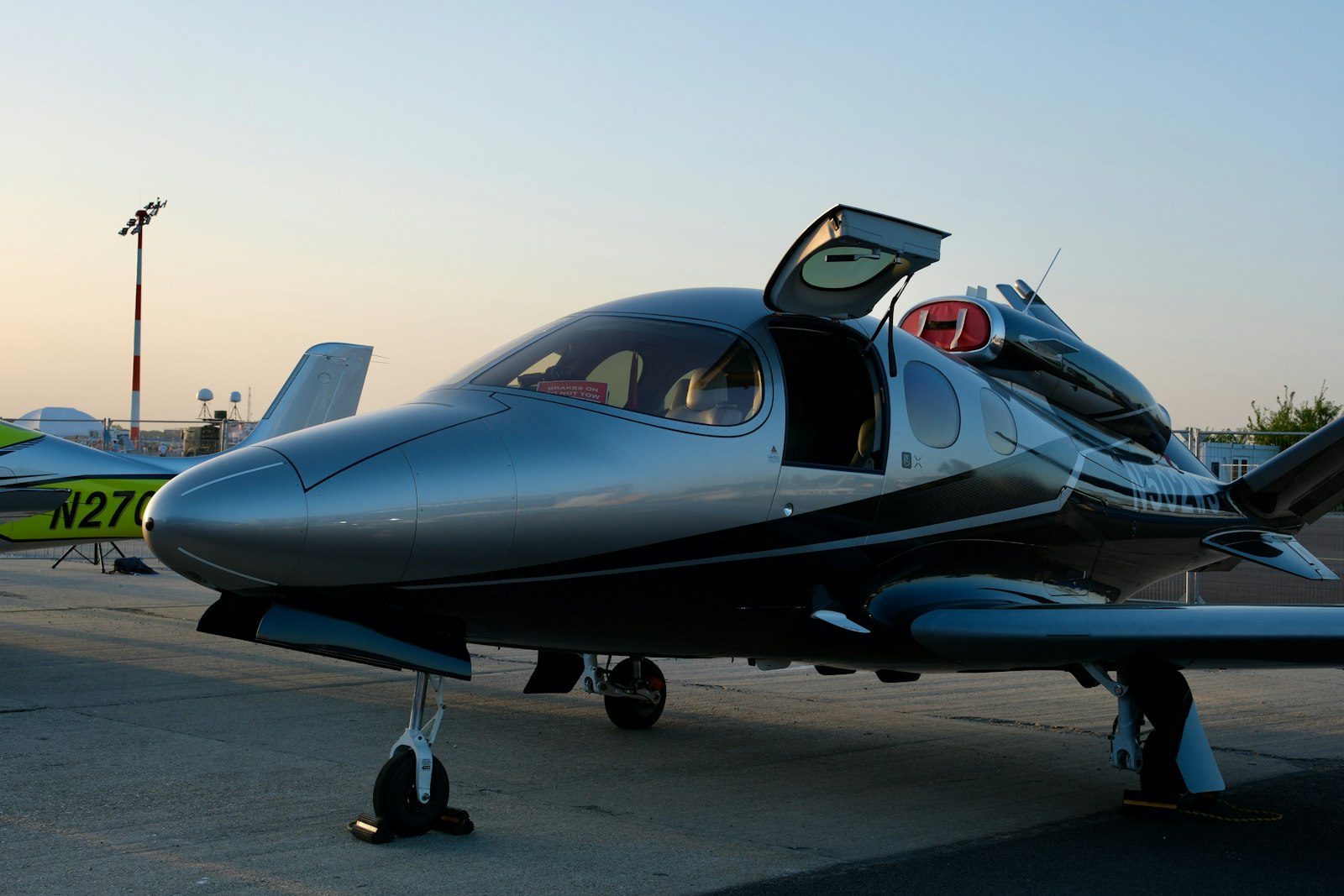
Turboprops earn that discount by trading speed for economy. They cruise below 30,000 feet at roughly 300 knots, well under a jet’s 450-plus knots in thinner air above most weather. Fine for a short regional hop; not the pick for anything that benefits from altitude or range.
The fees a bare hourly rate leaves out
Federal excise tax. 7.5% of the amount paid for charter transportation, per 26 U.S. Code Section 4261. This isn’t optional or negotiable; it’s a federal tax applied on top of whatever hourly rate an operator quotes.
Daily minimum billing. Most operators bill a minimum flight time per leg, commonly around 2 hours, regardless of how long the actual flight takes. A 45-minute hop still costs 2 hours of flight time on most contracts.
Repositioning. If the operator’s nearest available aircraft isn’t parked at your departure airport, someone pays to fly it there empty first. Magellan Jets, in its own pricing explainer, describes this cost as sometimes “quite significant, depending on the distance involved.” One-way charters are especially prone to hidden repositioning costs, since the aircraft often has to fly back empty or reposition for its next job.
Overnight crew fees. A sample itinerary published by evoJets lines out a $600 crew fee for an overnight stay away from base; Magellan cites a broader range running from a few hundred dollars to several thousand depending on the trip and crew size.
Fuel surcharges, landing fees, and handling. These vary by route and airport. A single sample itinerary from evoJets shows a $550 fuel surcharge and $750 in landing fees on top of the base flight cost, illustrating how quickly line items add up beyond the hourly rate.
The cost-driver framework, ranked
Six variables decide what a specific trip actually costs, roughly in order of how much they move the final number:
| Driver | What it does to the price |
|---|---|
| Aircraft class | Sets the base hourly rate, $2,300 to $17,000/hr, the single biggest lever by far |
| Trip distance and duration | Multiplies the hourly rate directly; long legs may also add a fuel stop or crew duty-time break |
| One-way vs. round-trip | A one-way trip still pays for the aircraft’s empty leg back (or onward) to its next job, either as a direct line item or folded into a higher quoted rate |
| Peak dates and seasonality | Spot pricing tightens around holidays and major events; jet-card daily minimums, a decent proxy for market-wide tightness, ran 11.6% higher quarter over quarter heading into Q1 2026 |
| Repositioning | The single biggest source of quote variance between two operators pricing the identical trip, see the sample trip below |
| Empty legs | Can cut 25-75% off a standard fare, but only on the operator’s fixed pre-set route and date |
Aircraft class and distance are the two you control directly, by choosing the mission-appropriate aircraft (see the full rate table) and being realistic about how many hours the trip actually needs. The rest, timing, positioning, and whether an empty leg happens to line up with your dates, are closer to negotiating within a market than pricing a fixed product.
The empty-leg discount, and its real constraints
When an aircraft has to fly without passengers, repositioning after dropping off a client, heading back to base, or moving to its next job, operators discount that flight rather than absorb the full cost of flying it empty. VistaJet, which runs its own empty-leg listings, prices these anywhere from 25% to as much as 75% below a standard charter fare on the same route.
The catch is real: the aircraft type, route, and departure window are all fixed by whoever’s original trip created the leg, availability sometimes doesn’t firm up until shortly before departure, and it’s strictly one-way. For a flexible traveler chasing the lowest possible cost, checking empty-leg listings before booking a standard charter is worth the five minutes; for anyone who needs a specific date locked well in advance, it’s not a reliable planning tool.
Charter versus locking in a rate
Everything above prices a single trip. If you fly often enough that spot-market variance starts to matter, the alternative isn’t a better charter quote, it’s a different product entirely: a jet card locks a fixed rate for 25-50 hours a year, fractional ownership makes sense past roughly 50 hours of consistent flying, and membership programs sell guaranteed access and fleet vetting rather than a rate at all. The full four-way comparison breaks down which model actually fits a given usage pattern, with real numbers from each.
A sample trip, worked through
Take a real, ordinary charter: a midsize jet, a 3-hour leg each way, round trip, 6 hours of total flight time. At the published $4,700-$5,500-an-hour midsize range, flight time alone runs $28,200-$33,000, before a single fee gets added. Layer in a fuel surcharge and landing fees in the range evoJets’ own sample itinerary shows, a combined $1,300 on their example trip, and the pre-tax subtotal moves to $29,500-$34,300. Federal excise tax applies to that whole subtotal, not just the bare flight-time line (more on why below), adding roughly $2,213-$2,573. All in, before repositioning or crew costs enter the picture at all, the honest floor on this trip runs about $31,710-$36,870, well above the bare hourly rate a marketing page might lead with. Repositioning, covered next, tends to be the single biggest source of quote-to-quote variation between operators from there.
On that same trip, even a single 1-hour repositioning leg adds another $4,700-$5,500, on top of everything already worked out, roughly 15% more, purely because of where the aircraft happened to be parked that morning.
One more detail changes the total: federal excise tax is charged on more than the hourly rate. The IRS’s own audit guidance treats fuel surcharges and landing fees as amounts paid “as a condition of receiving air transportation,” so they’re part of the 7.5% calculation too. Separately billed, non-transportation items like catering or ground-car service are the more typical exclusions. If a quote applies the tax only to the flight-time line and skips it on the fuel surcharge, ask why, that’s not how the IRS’s own guidance treats the base.
Trip length and winter: two costs quotes bury
A very short trip gets hit hardest by daily minimum billing, commonly around 2 hours per leg: the effective hourly rate on a 45-minute hop that bills as 2 hours runs nearly triple the quoted number. A very long trip works against you differently. Crew duty-time limits mean one crew can’t legally fly indefinitely, so a genuine multi-leg or transoceanic itinerary often needs a second crew or a scheduled rest period built in, cost that has nothing to do with the aircraft itself. The sweet spot sits in the middle: legs long enough to clear the daily minimum comfortably, short enough that one crew covers the whole trip inside a single duty day.
Deicing is a real, aircraft-size-scaled cost on winter operations, not a junk fee, and it applies regardless of class. Light to midsize jets typically run $1,000-$10,000 per treatment; large-cabin aircraft can run past $15,000 in heavy icing conditions, per Paramount’s own published cost breakdown. Glycol fluid alone runs $30-$50 a gallon, and sustained snow can mean more than one treatment before departure. Ask whether a winter quote already includes an estimated deicing line or whether it’s billed after the fact; either is normal, but it should be itemized rather than folded silently into a padded “all-in” number.
Getting an honest quote
Two operators quoting the same trip rarely land on the same number. Fleet age and equipment within a class move the price, so does how close the operator’s nearest available aircraft actually sits to your departure point, and so does whether the quote includes or omits repositioning, minimums, and fees. A neutral, cross-operator estimate, not one broker’s own fleet, is the honest starting point before you compare real quotes.
Ask every operator for an itemized breakdown, not a bare hourly number: flight-time cost, federal excise tax, any repositioning charge, the daily minimum if it applies, and crew or overnight fees if your trip requires them. An operator unwilling to itemize is either hiding a markup in the “all-in” number or hasn’t actually worked out the real cost of your specific trip yet. Either way, that’s useful information before you book.
Priced against the real hourly range, not one operator's number.